Deep Clean Elite
- 4.1
- Rating
- 1.00M
- Installs
- Free
- Price

 Analysis by App-foxy
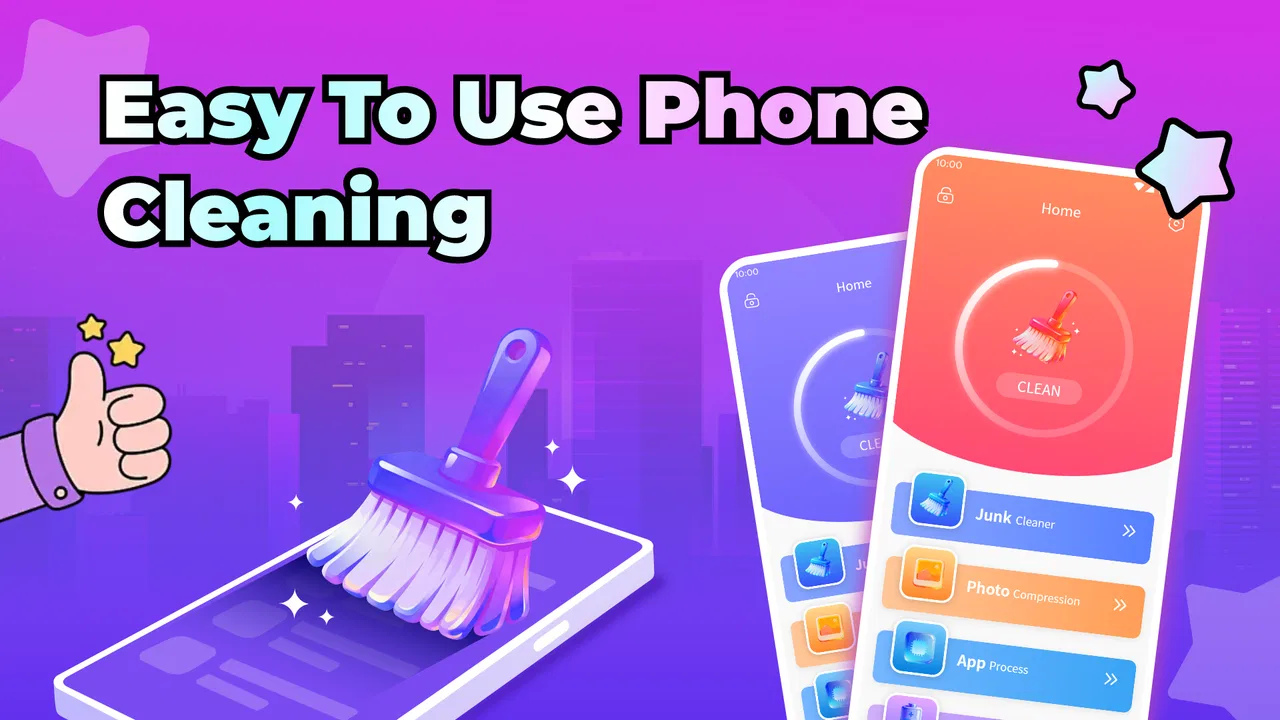
Deep Clean Elite is a free productivity app from PDI Turbo that focuses on one practical job: helping me clean up an Android phone. After spending time with it, I see the appeal immediately. Phone storage becomes messy in small, forgettable ways—downloaded files, old leftovers, duplicate-looking items, and temporary clutter—and dealing with each piece manually is tiring. This app is aimed at making that maintenance feel more approachable.
What makes the experience worth discussing is not just the promise of a cleaner phone, but how that promise fits into real mobile use. A cleaning tool is often opened when I am already short on space, dealing with a sluggish-feeling device, or trying to make room before taking photos or installing something. Those moments can also involve weak connectivity, limited data, and uncertainty about what is safe to remove. That is where the app’s practical value has to be judged.
Cleaning a phone when connectivity is part of the problem
The app’s store summary presents it as a way to clean an Android phone with less effort, and its short description reduces the idea to “Deep Clean.” In practice, I would treat it as a guided maintenance tool rather than a magic speed button. Cleaning storage can make a device easier to manage, but it cannot repair every cause of poor performance, and it should not be used casually when files have personal value.
You May Also Like

 Blood Strike: 2.5 Anniversary
Blood Strike’s Loadouts Turn Every Drop Into a Tactical Gamble
A close look at Blood Strike’s custom loadouts: how fast access to signature weapons reshapes its battle royale rhythm, rewards preparation, and narrows the gap between fights.

 Pandora - Music & Podcasts
Pandora’s Music Is Easy to Start, but Harder to Recover
Pandora’s strength is its low-effort path from a seed to a station. Its weak spot is how much confidence it asks you to place in connection, setup, and quiet recovery.

 8 Ball Pool
 Is Built on Rivalries, Rematches, and Routine
A close look at the rivalries, rematches, shared routines, and unanswered safety questions that turn a quick pool match into a persistent mobile community.

 Samsung Music
’s Quiet Strength Is Playing What You Already Own
Its reach comes less from spectacle than from dependable access to a personal library. That simplicity is both the app’s strongest retention engine and its ceiling.

 AccuWeather: Weather Radar
AccuWeather Review: A Quick, Clear Forecast for Everyday Decisions
For everyday plans, the best forecast is the one you can understand quickly. AccuWeather makes rain timing, radar, and local conditions easy to act on, with a few trade-offs.

 Hill Climb Racing
Why Hill Climb Racing Still Turns Crashes Into One More Run
A tiny car, a bumpy hill and one more upgrade: Hill Climb Racing keeps resurfacing because its simple chaos makes every near-miss feel personal.
More From Our News Desk



Connectivity shapes the situations in which a cleaner becomes useful. If I am on a train, in a crowded café, or using mobile data while preparing for a trip, I may notice that my phone is running out of room at exactly the wrong time. A cleaning app can be helpful in that moment because it gives me a focused place to review clutter instead of opening several file locations and guessing what can go.
I would not assume that every part of the experience works identically without a connection. The available product information does not establish an offline mode, so I would plan my cleanup when the app is ready to load normally and avoid depending on it as an emergency tool in a dead-signal area. That is a small but important distinction: the app may be useful during mobile situations, but I would not make unverified assumptions about its network behavior.
For a realistic example, imagine that I am about to record a long video and receive a warning that storage is nearly full. My first move would be to pause rather than immediately approve every suggested cleanup. I would open Deep Clean Elite, review the categories it presents, and look for items I recognize as disposable. If I am connected to a reliable network, I can also take the time to back up anything important before removing it. The app is most valuable here as a sorting aid, not as permission to delete blindly.
What the app is good at in everyday mobile situations
The strongest use case is regular housekeeping. Instead of waiting until the phone refuses an update or camera recording, I can use a cleaner as a reminder to inspect accumulated clutter. That changes the task from a stressful rescue job into a short routine. I especially like this approach for people who keep many apps, save media from messaging conversations, or download files and forget about them.
There is also a useful distinction between cleaning for space and cleaning for privacy. Removing an old download may free room, while removing a thumbnail or temporary item may simply reduce clutter. Those are not the same result. I would therefore judge each cleanup suggestion by its purpose rather than assuming that every item has an equal effect on speed or storage.
On a small-screen phone, the ability to review a cleanup in one place can be more comfortable than navigating a file manager. That convenience matters when I am using the phone one-handed or working under time pressure. At the same time, a dedicated file manager is often better when I need exact folder control, file previews, or a detailed record of where something came from.
Deep Clean Elite is also a reasonable fit for someone who does not enjoy Android’s storage menus. The app’s productivity category makes sense because the benefit is organizational: less time spent hunting through folders and more time spent deciding what is still needed. I would recommend it to a friend who wants a simple cleanup workflow, but I would still encourage that friend to slow down before confirming deletion.
When a cleaner is not the right answer
There are cases where I would skip this type of app. If my phone has plenty of free space and runs normally, installing a cleaning tool may add another layer to a problem I do not have. Android’s own storage controls may be enough for occasional maintenance, particularly for someone who wants to inspect every file manually.
I would also choose a file manager or the settings app when the main issue is a specific large video, document, or application. A targeted solution is safer than a broad cleanup when I already know what is consuming space. Similarly, if the phone is slow because of an aging battery, a faulty application, overheating, or a system issue, deleting clutter may not change much.
The app should not replace backups. Before a major cleanup, I would protect photos, work documents, recordings, and downloaded travel information. This is especially important when connectivity is unreliable: if a file has not been copied elsewhere, deleting it while offline or on a weak connection can turn a simple storage task into a recovery problem.
How I would handle a cleanup session
My preferred workflow begins with a quick check of what I actually need in the next few days. If I am travelling, I keep maps, tickets, boarding documents, language resources, and offline media in mind before removing anything. If I am preparing for work, I protect current documents and exported files. This context-first approach is more reliable than treating every old-looking item as disposable.
I open the app when the phone is stable and, when possible, connected to a dependable network.
I review the cleanup results instead of accepting them as an automatic verdict.
I separate obvious clutter from files whose purpose I need to verify.
I keep anything related to current travel, work, family, or backups until I know it exists somewhere else.
I perform a smaller cleanup first, then check whether the phone has enough room for the task that prompted me to open the app.
The fourth step is the one many people skip. A cleaner can make deletion feel safe because the interface groups items together, but grouping is not the same as understanding. A folder of downloads might contain disposable images, a receipt needed for reimbursement, and a document that is difficult to replace. I would rather recover less space than lose something important.
Another practical tip is to use the app before a predictable storage crunch. If I know I will take lots of photos during a weekend away, I would inspect the phone at home on a reliable connection, not while standing outside a venue with a full camera roll. That gives me time to verify files and recover from an accidental choice without pressure.
Recovery matters more than the cleaning animation
Any storage-cleaning experience should be judged by what happens after a mistake. If I remove the wrong item, the ideal response is not panic but a clear recovery plan: check the relevant trash or recycle area when available, inspect cloud or computer backups, and avoid filling the phone with new data that could complicate recovery. I would not rely on a cleaner alone to rescue deleted content.
This is also why I prefer incremental cleanup. Removing a small, clearly understood group first lets me confirm that the phone still behaves as expected. I can then continue with more questionable categories only if I understand their contents. It is slower than pressing one large button, but it is a better trade-off for personal devices.
Connectivity can complicate recovery. If I am working with cloud-backed photos or files, I need a stable connection to confirm that copies are available. A weak signal can leave me unsure whether an item is safely synchronized or merely visible on the device. I would postpone risky deletion until that uncertainty is gone. The app may help identify clutter, but it cannot make an incomplete backup complete.
For the same reason, I would be cautious about cleaning immediately after receiving files. A newly downloaded document can look like ordinary clutter even though it is needed for a meeting, a return, or a journey. A short waiting period and a glance at the filename or source can prevent an avoidable mistake.
Using it without wasting mobile data
Because this is a phone-maintenance tool, I would use it in a data-conscious way. I would avoid opening it repeatedly on a limited mobile plan simply to check the same storage state. A planned session on Wi-Fi is more sensible when the app needs to load content or when I am also verifying backups.
I would also keep cleanup and backup as separate decisions. If I need to upload photos before deleting them, I would complete and verify that upload first. Deleting files to save space while an upload is still incomplete defeats the purpose. The safest sequence is preserve, confirm, review, and then remove.
There is a subtle trade-off here. A phone with very little free space may be inconvenient to use, but aggressively deleting items can create a different kind of cost if I later need to download them again. For example, removing useful offline material while travelling may save local storage but force me to spend mobile data later. I would keep files that are expensive or difficult to retrieve, even if they are not used every day.
I would not expect the app to replace Android’s own controls for managing network-heavy applications. If the problem is background data, automatic media downloads, or streaming habits, the better fix is to change those settings at the source. Deep Clean Elite is more relevant to accumulated phone clutter than to controlling the connection itself.
How it compares with Android tools and file managers
Android’s built-in storage tools have one major advantage: they are already part of the operating system and usually provide direct access to application and storage management. They are a good choice for users who want minimal software and precise control. A traditional file manager is stronger when I need to browse folders, rename items, move files, or inspect individual documents.
Deep Clean Elite makes more sense when the problem is decision fatigue. Instead of starting with a directory structure, I can approach the phone through a cleanup-focused workflow. That can be friendlier for someone who knows the phone is cluttered but does not know where to begin. The trade-off is that a simplified workflow may provide less context than manual browsing, so I would use it for discovery and the system tools for sensitive decisions.
It also differs from performance-booster apps. I would be skeptical of any tool that suggests a quick cleanup will solve every lag issue. The useful result here is better storage organization. If the phone remains slow after removing clutter, I would investigate individual applications, system updates, battery health, heat, and available storage rather than repeating the same scan.
The app’s free price lowers the barrier to trying that workflow, and its Everyone age rating makes it broadly approachable. It supports the idea of a household utility rather than a specialist tool, though younger or less experienced users should still be shown what deletion means before they use it alone.
Version, compatibility, and who should try it
Deep Clean Elite is currently at version 1.1.0 and requires Android 6.0 or later. That gives it a wide potential reach across Android phones, including devices that are not recent. Compatibility alone does not guarantee that every manufacturer presents storage in exactly the same way, so I would pay attention to the wording and categories shown on my particular phone.
The app was released on January 16, 2026, and has built an average rating of 4.2 from around one thousand three hundred ratings, alongside roughly ninety written reviews. More than one hundred thousand installs indicate that it has reached a meaningful audience, but those figures are not a substitute for checking whether its workflow matches my habits.
I think it is best for people who want a straightforward starting point for phone cleanup, especially those who regularly run out of space and dislike manual folder hunting. It is less suitable for power users who want detailed file operations, people who already maintain their storage carefully, and anyone expecting a cleaner to diagnose every performance problem.
My strongest recommendation is to treat it as a review assistant rather than an automatic delete button. Let it help surface possible clutter, then apply personal judgment. That approach preserves the convenience while reducing the main risk of any cleaning utility: removing something that looked unimportant only because its context was hidden.
My connectivity verdict
Deep Clean Elite is most useful when it turns a stressful storage shortage into a controlled review. I like the idea of having a focused productivity app for this job, and the free entry point makes experimentation easy. Its value is clearest before travel, before a large photo session, or during routine maintenance—not as a last-second promise that a phone will instantly become faster.
Connectivity changes how confidently I would use it. With a dependable connection, I can prepare backups and verify important files before cleaning. With limited data or a weak signal, I would postpone anything risky and use Android’s local storage tools for immediate inspection if necessary. I would not assume offline behavior that has not been established, and I would never let a network warning push me into hurried deletion.
After reviewing it, I would recommend the app to a friend who wants help finding phone clutter but would include one condition: review before removal. Used that way, PDI Turbo’s productivity app can make Android housekeeping less intimidating. If I needed exact file control or a solution to a deeper performance issue, I would choose the system settings or a capable file manager instead.
Overall, the app earns its place as a practical cleanup option for the right user. It does not eliminate the need for backups, judgment, or sensible data use, but it can give a cluttered phone a more manageable starting point. That balance is what makes it useful: not the idea of cleaning everything, but the chance to decide more carefully what deserves to stay.
FAQs for Deep Clean Elite
01What is Deep Clean Elite and what does it offer?
Deep Clean Elite is a mobile application designed to optimize your device's performance. It offers features such as junk file removal, memory boosting, and battery optimization. The app aims to improve speed and efficiency, making your smartphone experience smoother and more enjoyable.
02Is Deep Clean Elite safe to use on my device?
Yes, Deep Clean Elite is safe to use. It is developed with security in mind, ensuring that all cleaning processes are performed without harming your device or compromising your personal data. The app is regularly updated to maintain its safety standards.
03Does Deep Clean Elite require a subscription or is it free to use?
Deep Clean Elite offers both free and premium versions. The free version provides basic optimization features, while the premium version unlocks advanced tools and ad-free usage. Users can choose the subscription plan that best fits their needs after trying the free version.
04How does Deep Clean Elite improve battery life?
Deep Clean Elite extends battery life by identifying and closing apps running in the background that consume power. It also provides tips and settings adjustments to maximize battery efficiency, helping your device last longer between charges.
05Can Deep Clean Elite help with storage management?
Yes, Deep Clean Elite assists with storage management by scanning and removing unnecessary files, such as cache and temporary files. It also identifies large files and apps that you may wish to delete or move, freeing up valuable storage space on your device.
Pros
- Intuitive interface for easy navigation.
- Comprehensive cleaning tools included.
- Fast performance with minimal lag.
- Customizable cleaning schedules.
- Supports multiple file formats.
Cons
- Requires in-app purchases for full features.
- Occasional ads can be intrusive.
- Not compatible with older devices.
- Limited cloud storage integration.
- Battery consumption can be high.

Deep Clean Elite
Gallery